
Why fluid loss is measured
When mud filtrate invades the formation it can damage productive zones and make reactive shales swell. A thick filter cake can cause tight hole and differential sticking. Fluid loss tests measure both: the volume of filtrate and the thickness of the filter cake.
The API (low-pressure, low-temperature) test
- Procedure: API RP 13B-1 for water-based muds
- Pressure: 100 psi
- Temperature: ambient
- Duration: 30 minutes
- Filter area: 7.1 in² (45.8 cm²) of filter paper
- Reported as: filtrate in mL per 30 minutes, and filter cake thickness in 1/32 in (or mm)
The API test is quick and simple, which makes it the routine daily check for water-based muds.
The HTHP (high-temperature, high-pressure) test
- Pressure: 500 psi differential. Up to 300°F this is usually 600 psi applied with 100 psi back pressure on the receiver, so the filtrate does not boil; higher temperatures need higher back pressure
- Temperature: set to suit the well, commonly 300°F (149°C) as a standard check
- Duration: 30 minutes
- Filter area: 3.5 in², half the API area, so the filtrate volume is doubled when reported
- Used for water-based muds (API RP 13B-1) and oil-based muds (API RP 13B-2)
Side by side
| API fluid loss | HTHP fluid loss | |
|---|---|---|
| Pressure | 100 psi | 500 psi differential |
| Temperature | Ambient | Elevated, often 300°F |
| Duration | 30 min | 30 min |
| Filter area | 7.1 in² | 3.5 in² (volume doubled) |
| Main use | Routine checks on water-based mud | Hotter wells, oil-based mud, additive qualification |
Which test, when?
- API for routine mud checks on water-based systems, especially in shallower, cooler sections
- HTHP for deeper, hotter wells, for all oil- and synthetic-based muds, and when qualifying fluid loss additives at downhole conditions
HTHP fluid loss is usually considerably higher than API fluid loss for the same mud, because temperature and pressure both increase filtration. A mud that passes the API test can still fail its HTHP specification, so hotter wells need both.
Beyond filter paper: the PPT
Filter paper does not look like a real formation. The permeability plugging test (PPT) replaces it with a ceramic disc of chosen permeability and runs at higher pressure, which makes it the better test for bridging performance and lost circulation materials.
Equipment and testing
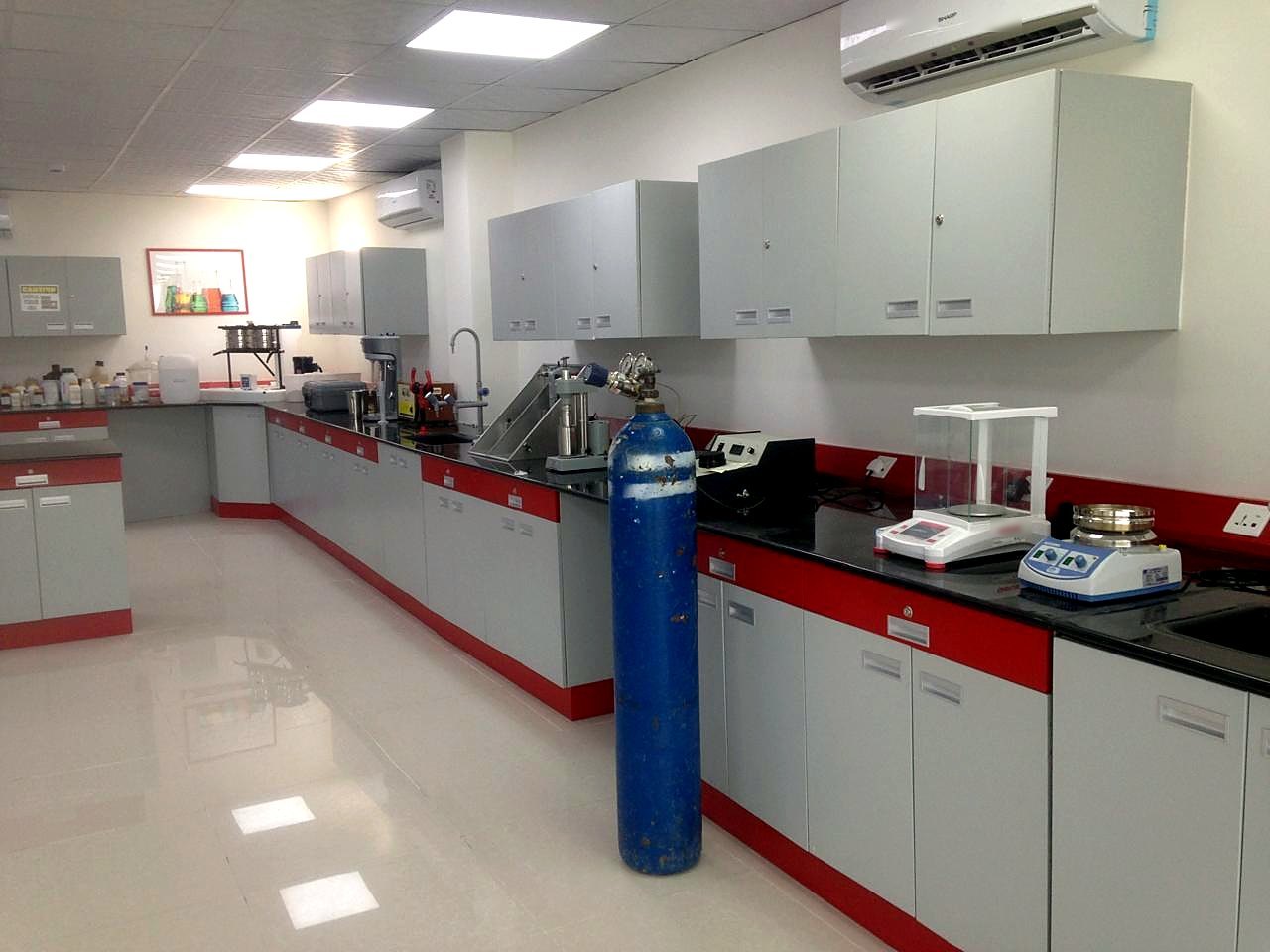
We supply the API filter press, HTHP filter press and PPT, and run these tests in our in-house R&D laboratory to API RP 13B-1 and 13B-2.