
Why rheology matters
Rheology describes how the mud flows. It decides how well the mud cleans the hole, how much pump pressure you need, and how much extra pressure the circulating mud puts on the formation. Three numbers from a rotational viscometer sum it up for daily mud checks: plastic viscosity (PV), yield point (YP) and gel strength.
Taking the readings
A rotational viscometer measures the dial reading of the mud at set speeds, usually 600, 300, 200, 100, 6 and 3 rpm. Under API RP 13B-1, water-based muds are commonly tested at 120°F (49°C), and the test temperature is always reported, because rheology changes with temperature.
Plastic viscosity (PV)
PV (cP) = 600 rpm reading − 300 rpm reading
PV mainly reflects the solids in the mud and the viscosity of the base fluid. A rising PV usually means drilled solids are building up. High PV slows drilling and raises pump pressure, so the usual fix is better solids control or dilution, not more chemicals.
Yield point (YP)
YP (lb/100 ft²) = 300 rpm reading − PV
YP reflects the attractive forces between particles while the mud is flowing, and is a main indicator of the mud’s ability to carry cuttings. Viscosifiers such as bentonite and xanthan gum raise YP; contamination can also raise it unexpectedly. Thinners and dispersants lower it.
Gel strength
Gel strength is the dial reading at 3 rpm after the mud has been left static, usually for 10 seconds and 10 minutes (sometimes also 30 minutes). It shows how well the mud suspends cuttings and weighting material when circulation stops.
- Flat or fragile gels: the 10-second and 10-minute readings are close. Good suspension that breaks easily when pumps start.
- Progressive gels: the 10-minute reading is much higher than the 10-second reading. Often a sign of high solids or contamination, and can cause pressure surges when breaking circulation.
The low-shear readings
The 6 and 3 rpm readings show how the mud behaves at the low shear rates found in a wide annulus. They are closely watched in deviated and horizontal wells, where cuttings tend to settle on the low side of the hole.
Reading the trend
| What you see | Likely cause | Typical action |
|---|---|---|
| PV rising | Drilled solids building up | Improve solids control, dilute |
| YP and gels rising | Contamination or high solids | Identify the contaminant, treat or thin |
| YP and low-shear readings too low | Not enough viscosifier | Add xanthan gum, PAC HV or bentonite |
| Progressive gels | Solids or contamination | Solids control, chemical treatment |
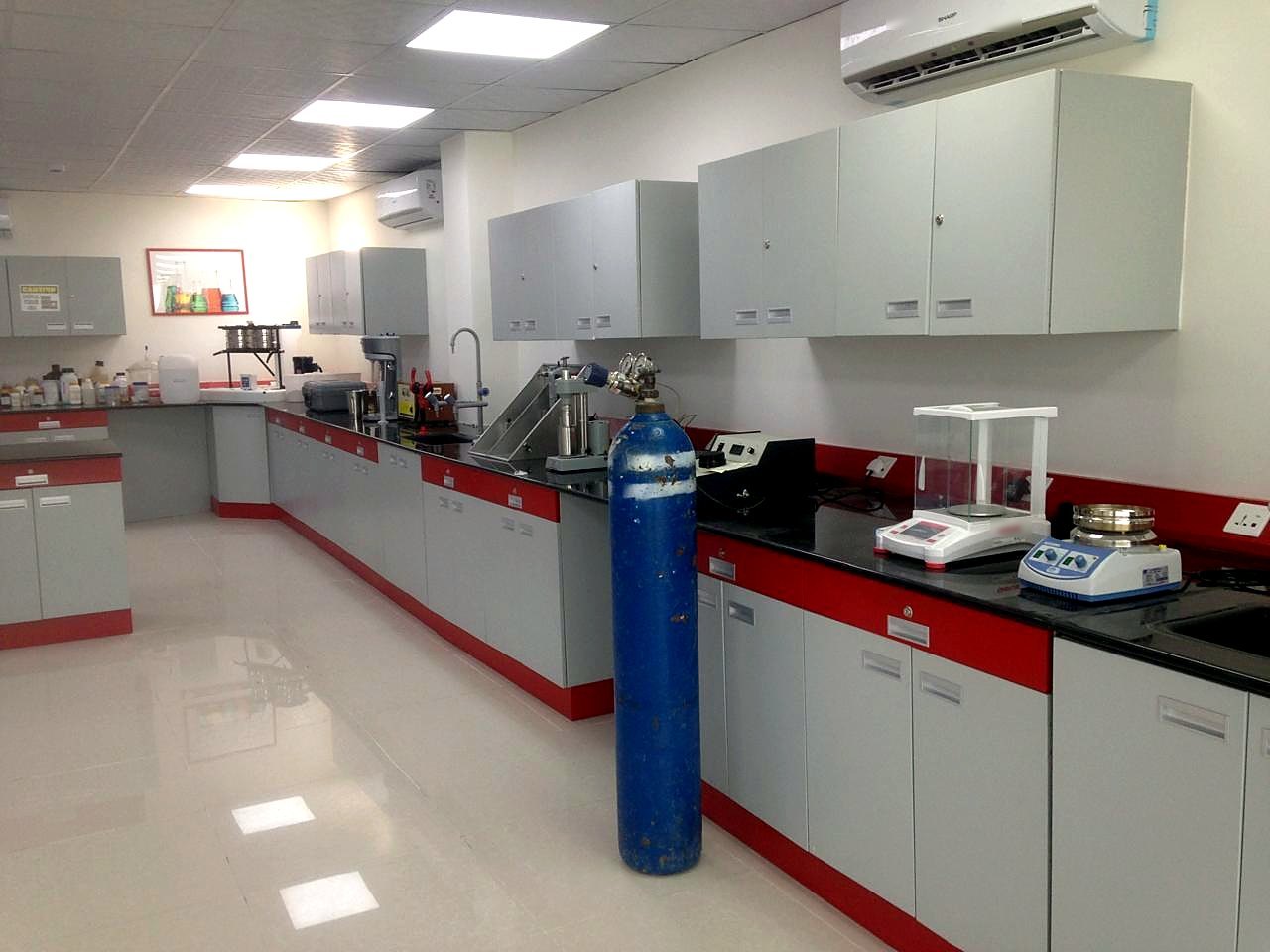
Our laboratory measures full rheology profiles to API RP 13B-1, and we supply the viscosifiers and fluid loss additives used to adjust them, as well as 6-speed viscometers for measuring them.