


Stop Losses Before They Stop the Well
Every barrel of mud lost to the formation costs money, and the rig time spent curing losses costs more. Severe losses can also lower the mud column in the hole, leading to well control risk, stuck pipe and an unstable wellbore.
STFLUX™ lost circulation materials are a range of fibrous, granular and flaked materials in fine, medium and coarse grades. They are designed to be combined, so the blend matches the opening the mud is escaping through.
How STFLUX™ Supports Wellbore Stability
Wellbore instability has mechanical and chemical causes. STFLUX™ addresses the mechanical side, where losses and pressure transmission into weak or fractured rock weaken the wellbore.
Seals Pores & Microfractures
Sized particles bridge and seal openings at the wellbore wall, reducing filtrate and whole-mud invasion into the formation.
Limits Pressure Transmission
A low-permeability seal slows the transfer of mud pressure into the near-wellbore rock, which helps keep weak and fractured formations stable.
Wellbore Strengthening
Correctly sized material added before drilling known weak zones props and seals small fractures as they form, helping the wellbore withstand higher pressure before losses start.
STFLUX™ is not a shale inhibitor. Reactive, water-sensitive shales also need chemical inhibition in the mud system. Our team can advise on the complete fluid design.
Bridge, Seal, Strengthen
Lost circulation material works in three stages: bridge, seal and strengthen. We then verify the blend in our laboratory before it goes downhole.
Bridge
Granular and flaked particles sized to the opening lodge at its entrance and form a bridge.
Seal
Finer particles fill the gaps in the bridge, and fibres knit it into a low-permeability mat.
Strengthen
The sealed bridge props small fractures and resists the mud column’s pressure, so circulation resumes and the wellbore can tolerate higher mud weights.
Verify
We prove each blend on PPT and slotted disc tests in our laboratory before it goes downhole.
Choose by Formation and Loss
A starting point for selecting the grade. The final blend and concentration are confirmed by laboratory testing on your mud.
| Formation or opening | Typical loss | STFLUX™ |
|---|---|---|
| Permeable sands, high-permeability formations | Seepage | STFLUX Fibrous, fine, as a background treatment |
| Microfractures, small induced fractures | Seepage to partial | STFLUX Fibrous, fine to medium, with STFLUX Granular (fine) |
| Natural fractures | Partial to severe | Pill of medium to coarse STFLUX Fibrous, Granular and Flaked |
| Vugs, caverns, fractured carbonates | Severe to total | High-concentration pill of coarse STFLUX Granular and Flaked |
The STFLUX™ Range
STFLUX™ is the trademark of ST Chem Solutions Private Limited for its range of engineered lost circulation materials.
STFLUX Fibrous
Fine, medium and coarse grades. Fibres knit bridging particles into a tight mat, and make seepage-control treatments easy to mix and pump.
Best for: seepage to moderate losses, and as a component of loss pills.
STFLUX Granular
Graded granular particles that form the load-bearing bridge across pores and fractures.
Best for: partial to severe losses, combined with fibres and flakes.
STFLUX Flaked
Mica flakes that lie across openings and help seal fractures and large pores.
Best for: severe losses in fractured and cavernous zones.
Custom blends of all three are available. Grades, concentrations and pack sizes on request.
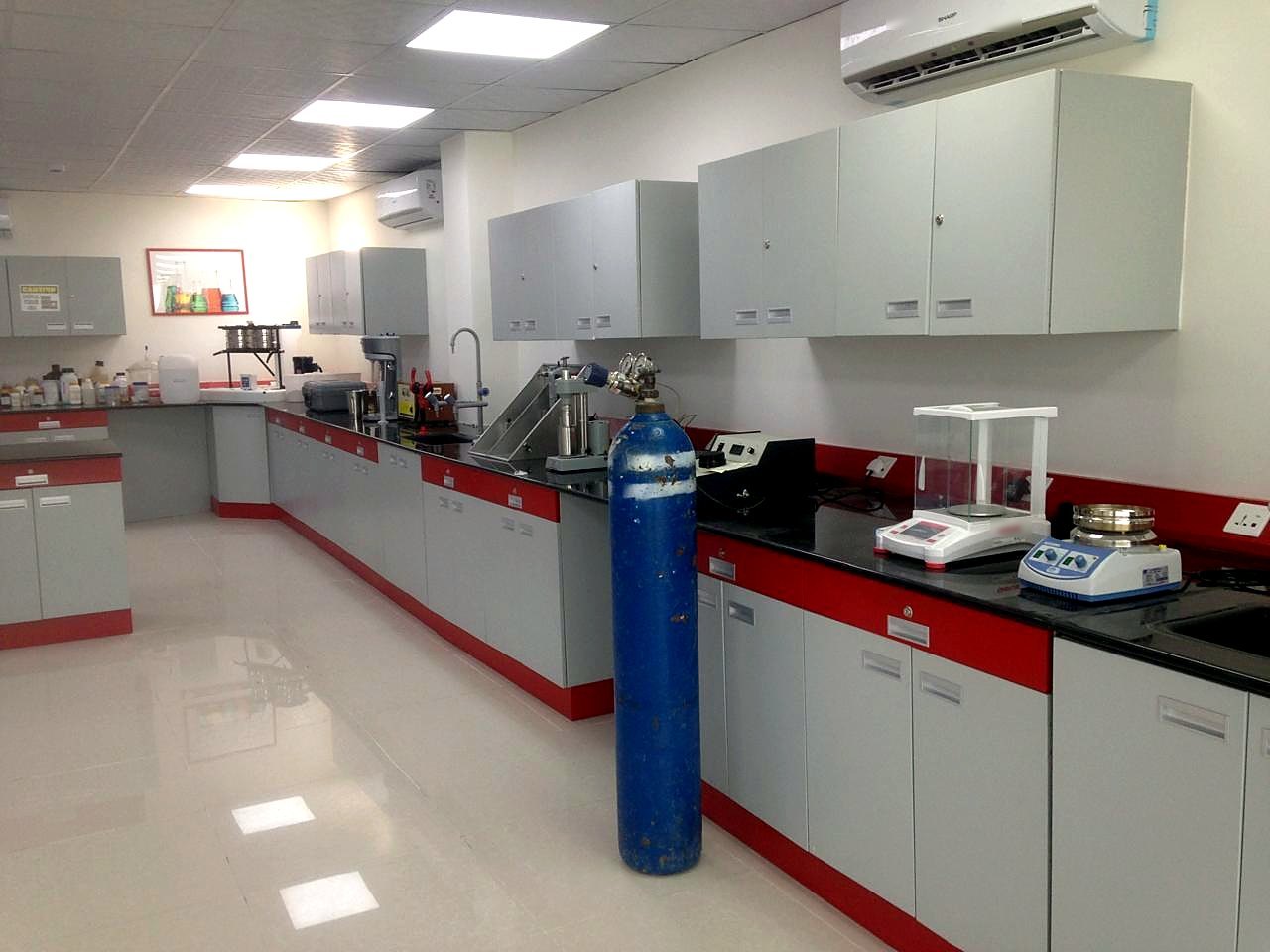
Tested Before It Goes Downhole
Choosing LCM by guesswork wastes pills and rig time. Our R&D laboratory tests the blend against conditions that represent your loss zone:
- Permeability plugging test (PPT): ceramic discs of chosen permeability simulate porous formations
- Slotted disc tests: discs with set slot widths simulate fractures
- Mud compatibility: rheology and fluid loss checked with the LCM in your mud
The result is a recommended blend and concentration, backed by test data, before you commit a pill to the well.
How LCM Is Applied
Background Treatment
Fine LCM kept in the active system while drilling permeable or weak zones, to control seepage and help prevent losses before they start.
Spotted Pill
A mixed pill of medium to coarse LCM spotted across the loss zone when partial losses occur, with pump rate reduced while it works.
High-Concentration Squeeze
For severe and total losses: a coarse, high-concentration pill, often squeezed into the zone in stages.
Check shaker screen sizes so background LCM is not removed at surface, and check downhole tool limits before pumping coarse grades.
Lost Circulation Questions
Which LCM grade do I need?
It depends on the loss rate and the size of the opening the mud is escaping through. Send us the loss rate, formation and mud details, and our laboratory will recommend a blend and concentration, confirmed by PPT or slotted disc testing.
Can your LCM be used in oil-based mud?
Yes. Our lost circulation materials are compatible with both water-based and oil-based drilling fluid systems.
Will LCM plug MWD tools or motors?
Coarse grades can. Always check the LCM size and concentration limits given by your downhole tool supplier, and choose a finer grade or a bypass arrangement where needed.
Can you make a custom LCM blend?
Yes. We blend fibrous, granular and flaked materials in the proportions your loss zone needs, and test the blend in our laboratory before supply.
Do you supply technical and safety data sheets?
Yes. A TDS and SDS are available for every LCM product, and each batch is supplied with a certificate of analysis.
Losing Mud? Tell Us About the Zone.
Share the loss rate, formation and mud details. Our team will recommend a blend within one working day.